


Strong nano-architected materials by residual stress engineering.
SuNRISE — Strong Nano-Architected Materials by Residual Stress Engineering is a research project funded under the Italian FIS programme and hosted at Roma Tre University. The project addresses a central limitation of nano-architected materials: the lack of mechanical reliability despite outstanding strength-to-density ratios.
What makes SuNRISE different
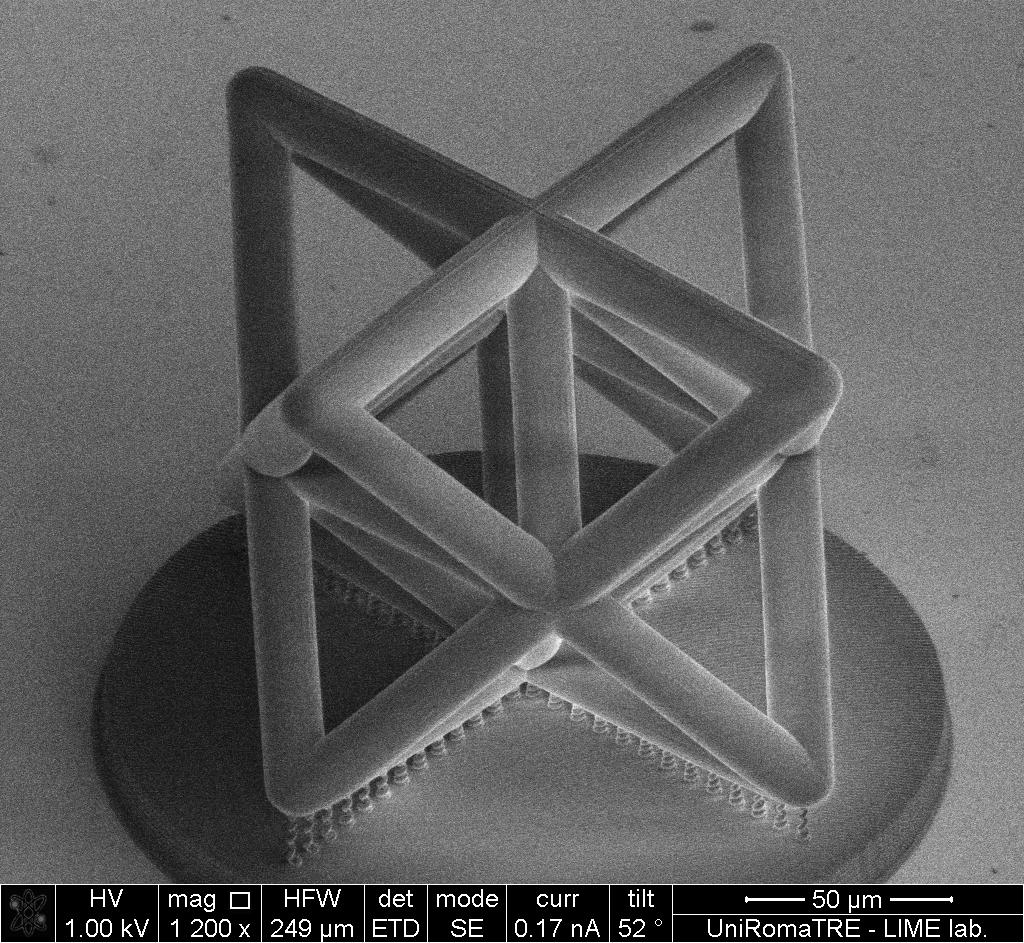
Architecture as a control knob
Unit-cell topology is selected to control stress localisation and failure pathways—not only stiffness and strength.

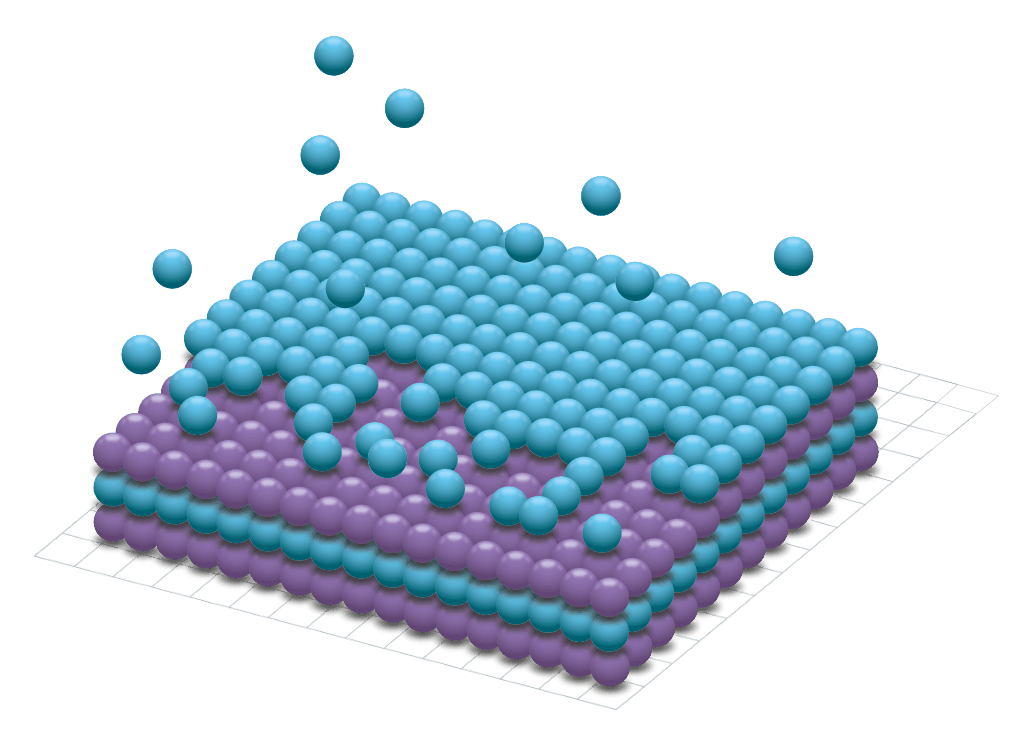
Stress-engineered interfaces
(PE-)ALD/PVD multilayers provide conformal coatings and programmable stress gradients on complex 3D lattices.
Predictive reliability
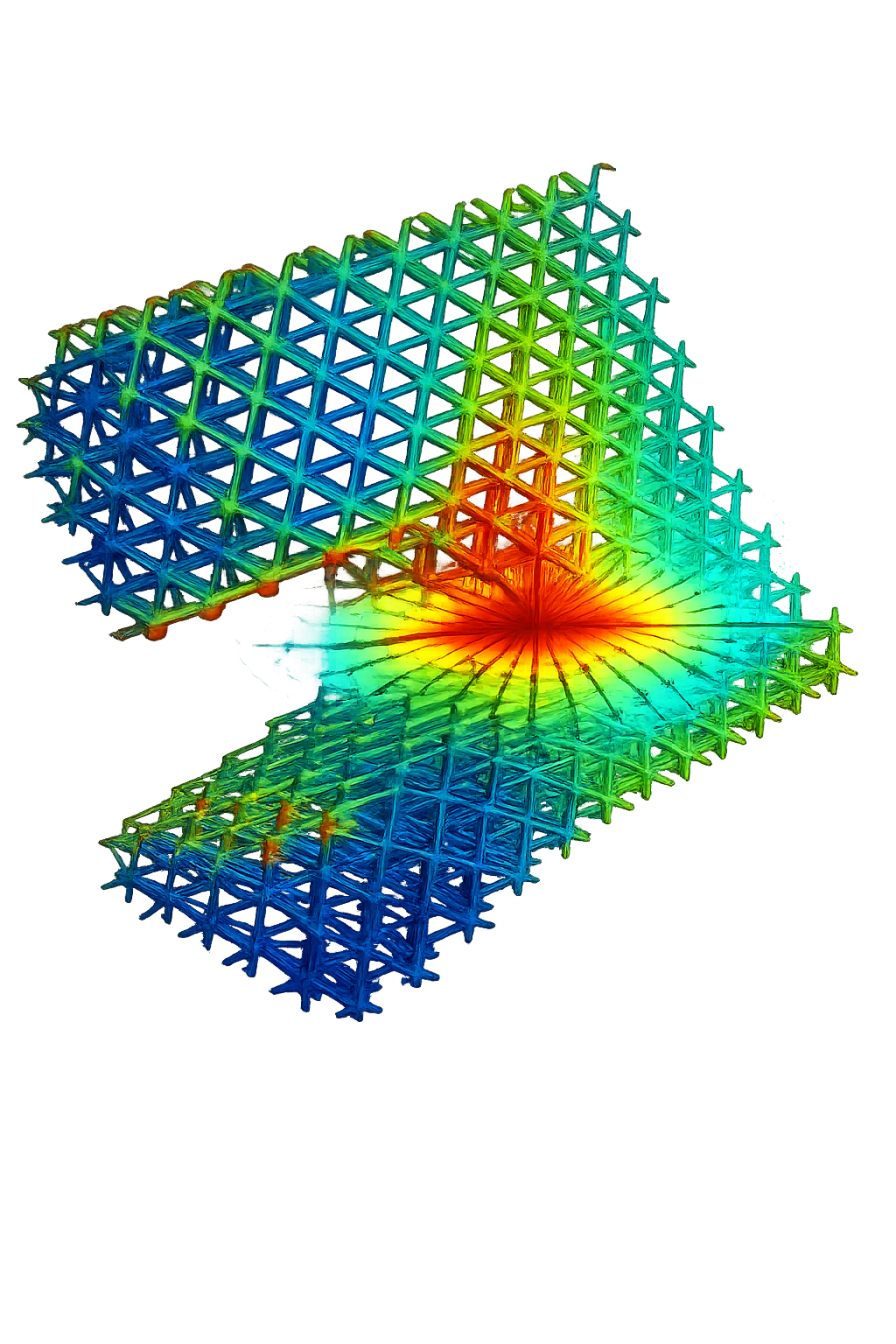
Nanomechanics and structural modelling identify where cracks start, how they propagate, and how stress states can suppress failure.
How the research is executed
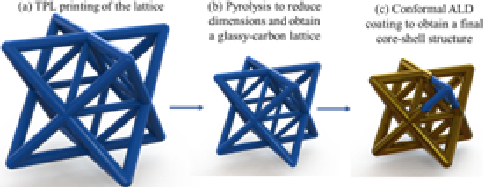
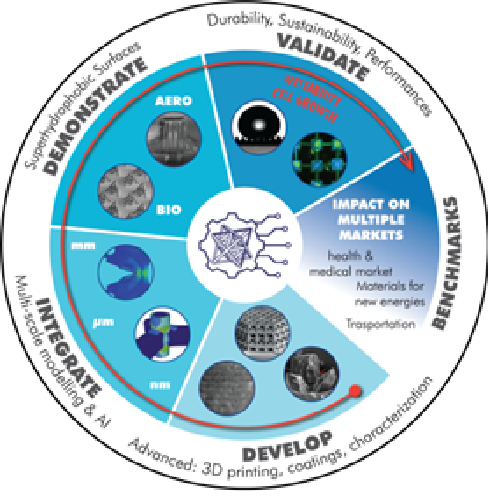
SuNRISE follows a closed-loop workflow from fabrication to validation. Each step produces measurable outputs that constrain the next—maximising reproducibility.
- Fabricate nano-architected unit cells via two-photon lithography.
- Engineer interfaces and residual-stress states via conformal multilayers.
- Measure local stress and failure triggers at the relevant length scale.
- Model fracture and reliability to guide topology and coating design.
A reliability-driven pathway
Architectures and coatings are refined based on local stress measurements and fracture evidence, supported by modelling and data-driven optimisation.
Explore
Vision & Objectives
Project rationale, hypothesis, and measurable scientific objectives.
Programme & pillars
Architecture, Coatings, characterisation, modelling , and the project pathway.
Methods & infrastructure
TPP, ALD/PVD, FIB-SEM, Analytical SEM, and nanomechanics platforms.