


From nano-architecture to mechanical reliability
SuNRISE develops stress-aware nano-architected materials by combining two-photon lithography, conformal nano-coatings, advanced nanomechanics, and predictive structural modelling. The goal is not only higher strength-to-weight—but reproducible failure behaviour and reliability driven by engineered residual-stress and interfaces.
Core idea
Reliability in nano-architected systems is typically limited by defects, process variability, and uncontrolled stress build-up. SuNRISE treats residual stress and interfaces as design parameters, enabling architectures and coatings that are not only lightweight and strong, but also predictable under load.
- Architecture sets deformation pathways and stress localisation.
- Conformal coatings tune interfaces and stress gradients in 3D.
- Characterisation measures local stress and failure triggers.
- Modelling + ML converts evidence into design rules.
Research pillars
1) Architecture & fabrication
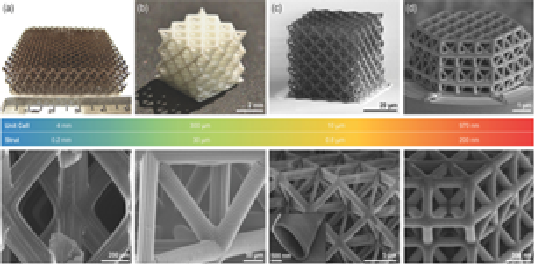
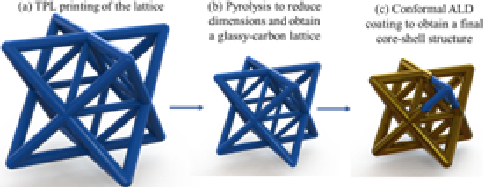
Two-photon lithography enables designed micro/nano unit cells and hierarchical architectures. Geometry is treated as a controllable variable to manage stress concentration and failure initiation.
2) Stress-engineered coatings
(PE-)ALD and PVD provide conformal films and multilayers on complex 3D lattices, enabling interface control and programmable residual-stress gradients.
3) Multiscale characterisation
Nanomechanics and high-resolution stress assessment identify where cracks start, how they propagate, and which stress states promote (or suppress) failure.
4) Predictive modelling & ML
Structural modelling (including fracture-oriented approaches) and data-driven optimisation connect processing → stress → failure, delivering predictive rules for architecture and coating design.
Research pathway
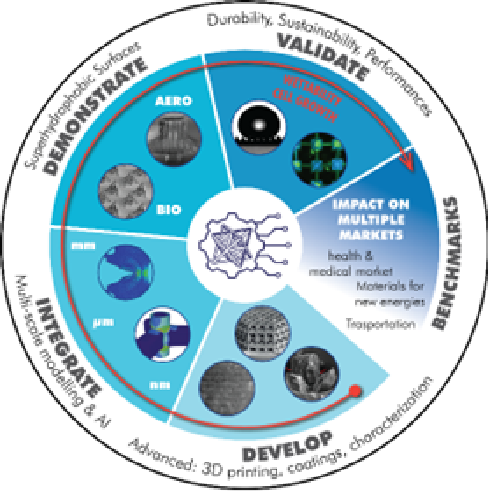
SuNRISE follows a closed-loop pathway that keeps the project grounded in measurable performance. The same logic drives materials development, validation, and translation to demonstrators.
- Develop architectures and coating strategies for controllable stress states.
- Integrate fabrication, coating, and measurement into repeatable workflows.
- Demonstrate reliability improvements on selected high-impact use cases.
- Validate durability, sustainability, and performance under relevant conditions.
Work packages
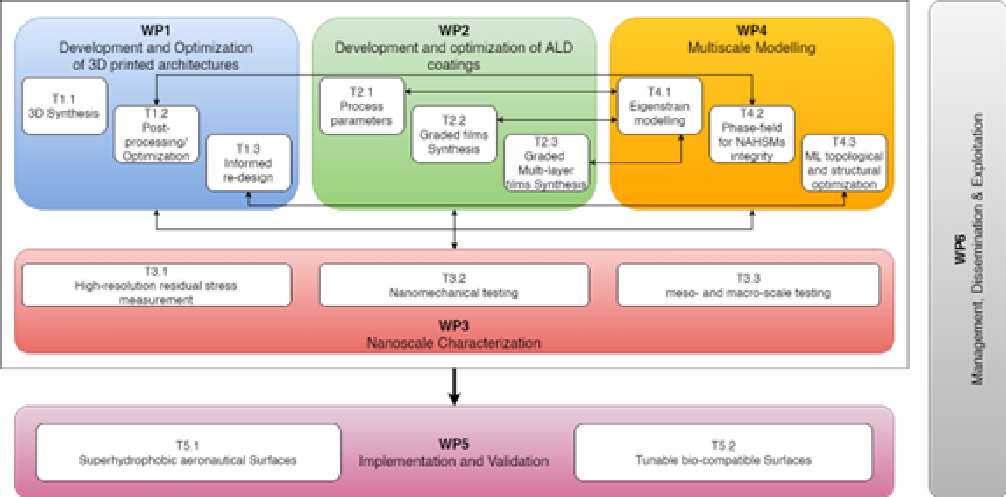
The project is organised into a coherent workflow from architecture development to validation. Each work package is designed to transfer actionable information to the next—minimising “pretty results” and maximising reproducibility.
- WP1 – 3D nano-architectures: synthesis, post-processing, re-design.
- WP2 – ALD/PE-ALD coatings: process parameters, graded films, graded multilayers.
- WP3 – Nanoscale characterisation: residual stress + nanomechanics + scale-up testing.
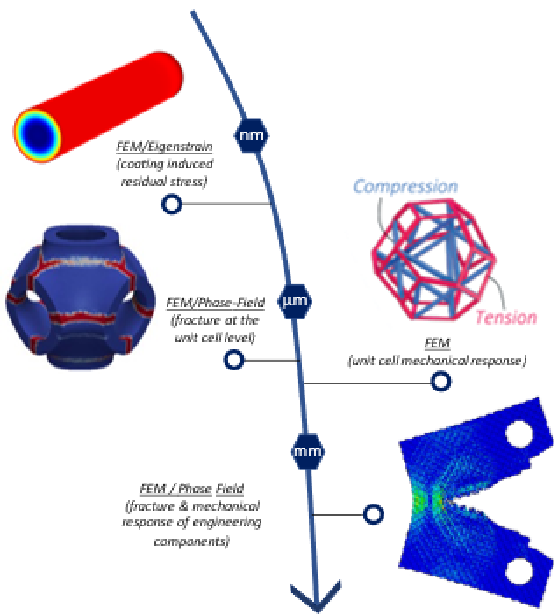
- WP4 – Multiscale modelling: eigenstrain, phase-field, ML-guided optimisation.
- WP5 – Implementation & validation: aeronautical and biocompatible demonstrators.
Key methods enabling the science
Local stress, measured where it matters
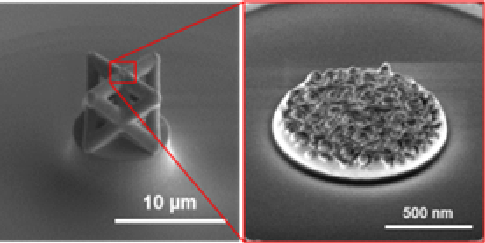
Residual stresses in coatings and nodes are quantified at the relevant length scale, enabling direct correlation between stress state, interface quality, and crack initiation. This closes the gap between “process settings” and failure evidence.
Models that predict failure—not just stiffness
Multiscale structural models connect coating-induced stresses, architecture topology, and fracture processes. The output is practical: design rules that prioritise reliability and tolerance to imperfections.
See the project in action
Explore team expertise, facilities, and project outputs—papers, talks, and resources—updated throughout the project lifecycle.